// 01. Introduction
My organization providers a data bridge between Payers (insurance companies) and Providers (doctors). The process is triggered by a member (patient enrolled in a plan with the payer) appointment:
The Trigger: Service tracks an upcoming appointment and requests payers to share the "Gap" request (potential / reccurence / diagnosed medical conditions)
The Handoff: The service validates patient and payer plans and pushes it into the Providers electronic record system (EHR) from them to review as part of their workflow
The Return: If the Doctor is aligned with the request they address the gap data and this is sent back to the Payer.
view organization service structure
// Problem hypothesis
The problem origin lay in the uncertainty of the "Trigger". While Payers sent the data, they don't have any visibility into the EHR or exam room. The could not confirm if the doctor actually viewed the alert or ignored it. When no data returned, they could not distinguish between a system failure and a doctor's inaction.
Need for validation: Payer teams began demanding proof that their requests were actually reaching the doctors. With no customer-facing interface available, our Customer Success team was forced to email static screenshots of our internal tracking as "proof". This manual workaround quickly spiraled into a support bottleneck, preventing the team from scaling.
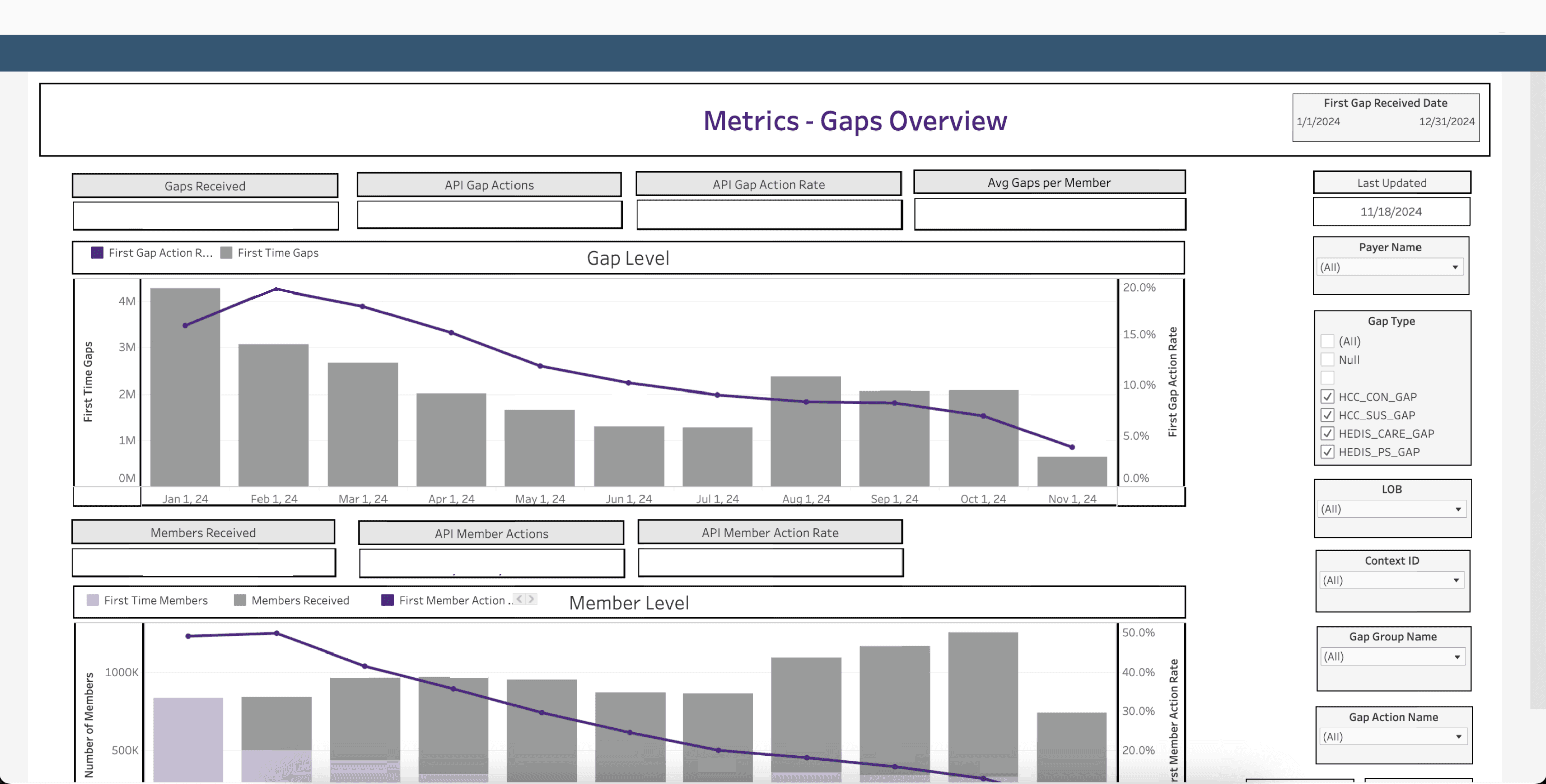
Static screenshots of API and provider response leads to Data Discrepancies
THE BLACK BOX
Serivce identifies a patient but payer can not confirm if provider actually viewed and responded to the gap in EMR.
// 03. Design strategy
Structuring Discovery Before Design
RESEARCH OUTLINE
Defined the core discovery objectives and categorize what we needed to learn, which guided the conversation script:
Gap Data Importance
Stakeholders and Intent
Current state and pain points.
TEAM ALIGNMENT
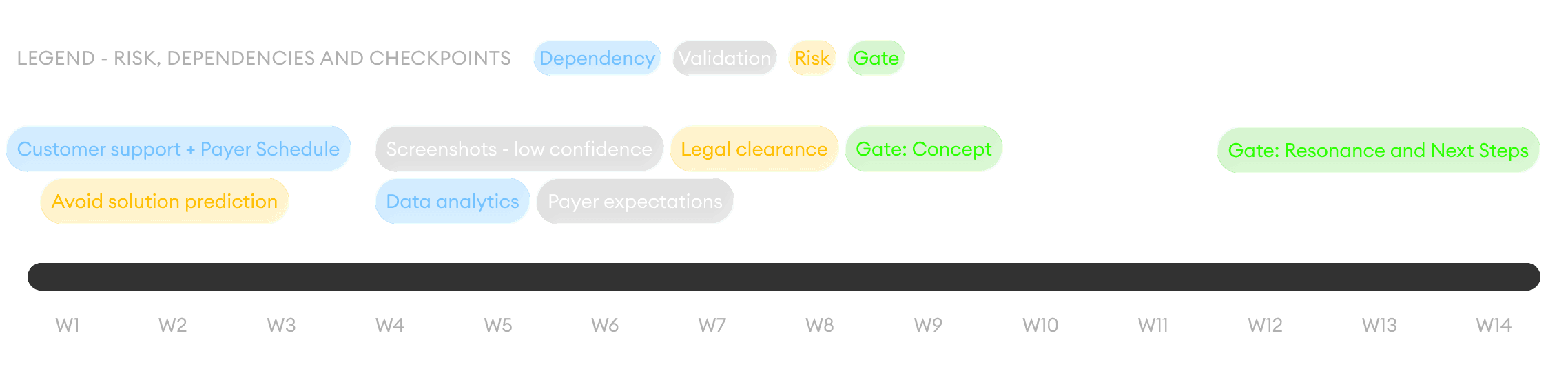
Orchestrated cross-functional alignment across Research, Engineering, Legal, Product and Relationship teams. Scheduled bi-weekly stand-ups to address early architectural blockers and complex privacy constraints.
GOVERNANCE COMPLIANCE
Partnered with Legal and Compliance to resolve tension between Payer Transparency and Provider Privacy. We defined the exact threshold of "De-identified" vs "Actionable" data to ensure HIPAA compliance
DESIGN PLAN ROADMAP

RISKS and DEPENDENCY
// 04. Research synthesis
// Persona
Program Director
"I have to show value to leadership. I need better visibility into appointments and provider response."

CORE RESPONSIBILITIES
Risk adjustment flow
Vendor Management
Financial Performance
CRITICAL PAIN POINTS
Internal teams spend time for any actionable insights
Growth depends on invisible engagement
High level metrics makes it hard to justify investment
// Market reality
High Admin Waste: Data is Stale Instantly
METHOD: MANUAL ROSTERS
Spreadsheets shared via secure email or printed sheets. Prone to human error and version-control hell.
Tool Fatigue: Leading to Low Compliance
METHOD: ISOLATED PORTALS
Proprietary web tools that require providers to "Double Document" outside their EMR.
// Tool need validation
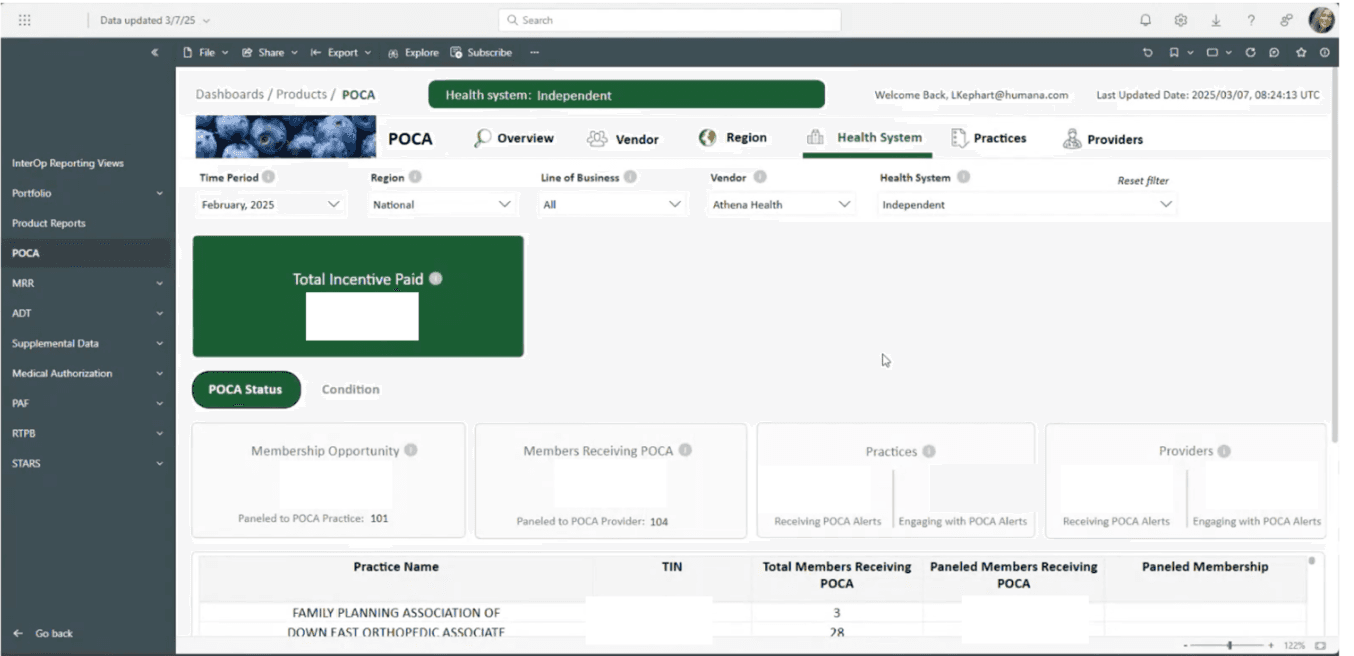
Enterprise and mid-size payers either already have a custom dashbaord built and emerging and small-size payers use traditional methods to track data.
Sample screenshot of payer-side built analytics tool.
THE VERDICT:
Large payers will use the organization insight console as a Gut Check validating their internal metics against out source-of-truth
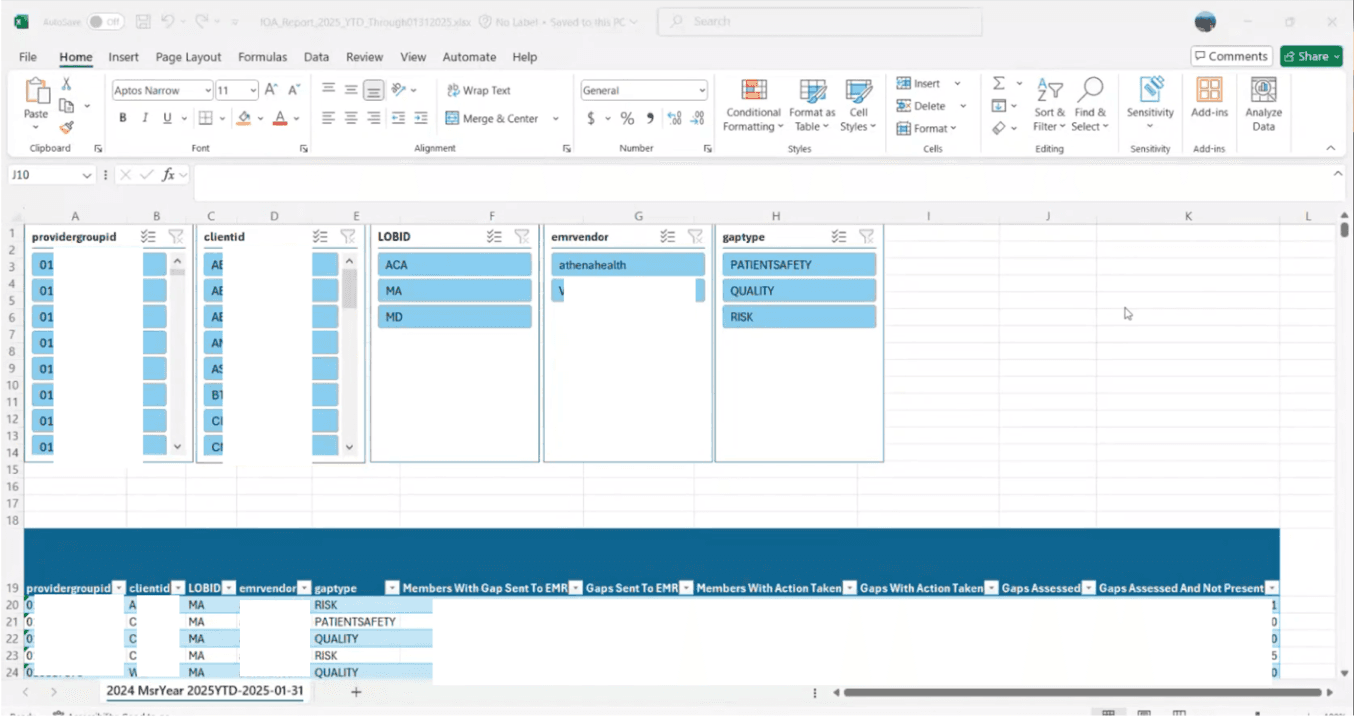
Sample screenshot of excel tracking
THE VERDICT:
Emerging and small payers will use the organization insight console as their primary engine
// Verdict
Payers don't lack data; they lack objective proof of gaps surfaced to provider and action taken as required by HEDIS Compliance and Star Ratings.
With final team alignments the three pillars were defined:
Visibility Vs. Efficacy
The risk that transparency might reveal service gaps rather than strengths. I advocated for data ownership as a driver for service iteration.
Provider Alert Fatigue
Payers and Product team noted concerns that overloading requests via digital outreach could lead to provider burnout and partnership friction.
The Final Guardrail
System governance of performance metrics with restrictions for payers from viewing direct contact details will ensure relationship while delivering insights.
REDEFINED PROBLEM STATEMENT
Payers don't lack data; they lack objective proof of gaps surfaced to provider and action taken as required by HEDIS Compliance and Star Ratings
VALUE STATEMENT
Provisioning a self-service analytics engine to transform complex integration data into immediate gap visibility. By automating accurate HEDIS/Star Rating reporting, we secure payer funding, ensure regulatory compliance, and unlock the identification of risk-adjustable conditions with minimal effort.
TARGET SUCCESS CRITERIA
> 70%
Analytics Adoption Rate
ACROSS ALL PAYER SEGMENTS WITHIN 6 MONTHS
Avg. 5 hrs/wk
Analyst Efficiency
REDUCTION IN MANUAL RECONCILIATION PER USER
< 5%
Data Discrepancy
TARGET REDUCTION FROM THE 20% LEGACY BASELINE
// 05. Defining the North Star
From a simple ask to a deeper challange
// The fragment experience
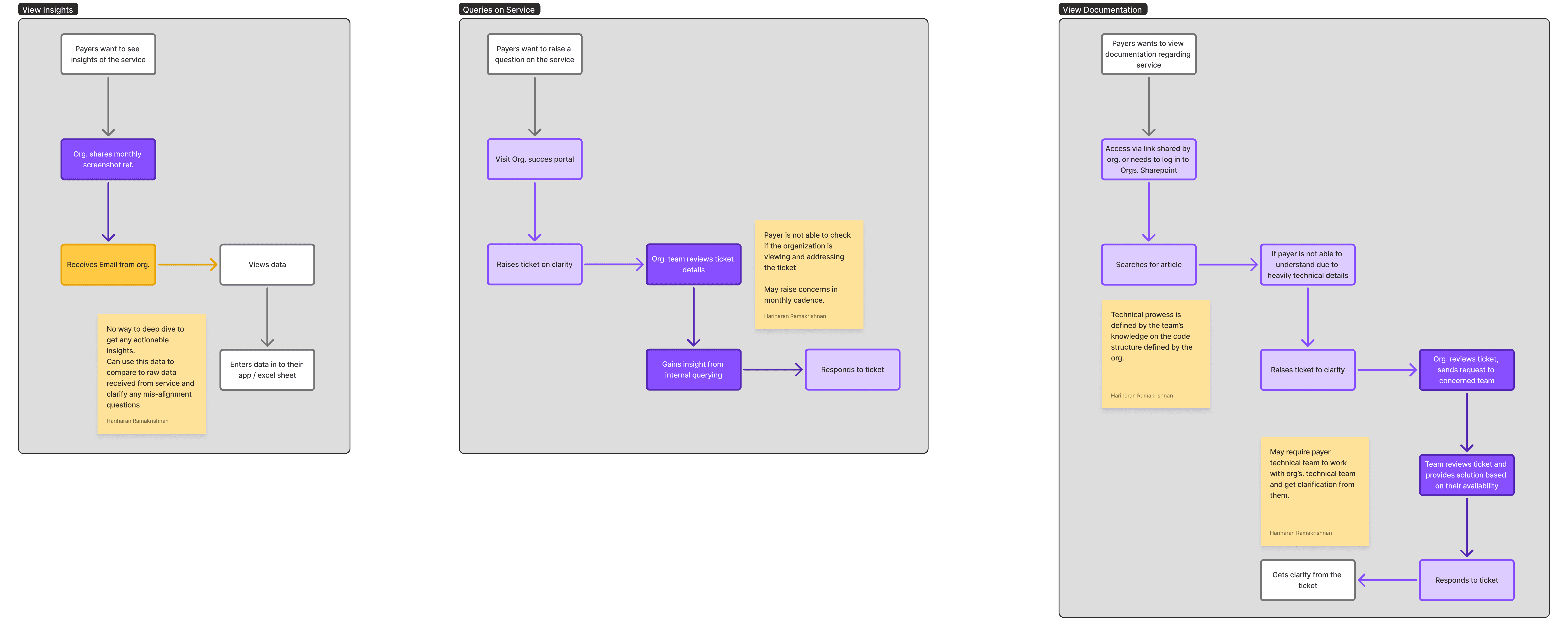
While conducting primary research, my parallel work on other payer products revealed a deeply fragmented experience. Critical analysis was siloed in a platform, documentation was buried in SharePoint, and change requests were processed through Payer Salesforce Channel where flows lacked status transparency.
// 05. Design
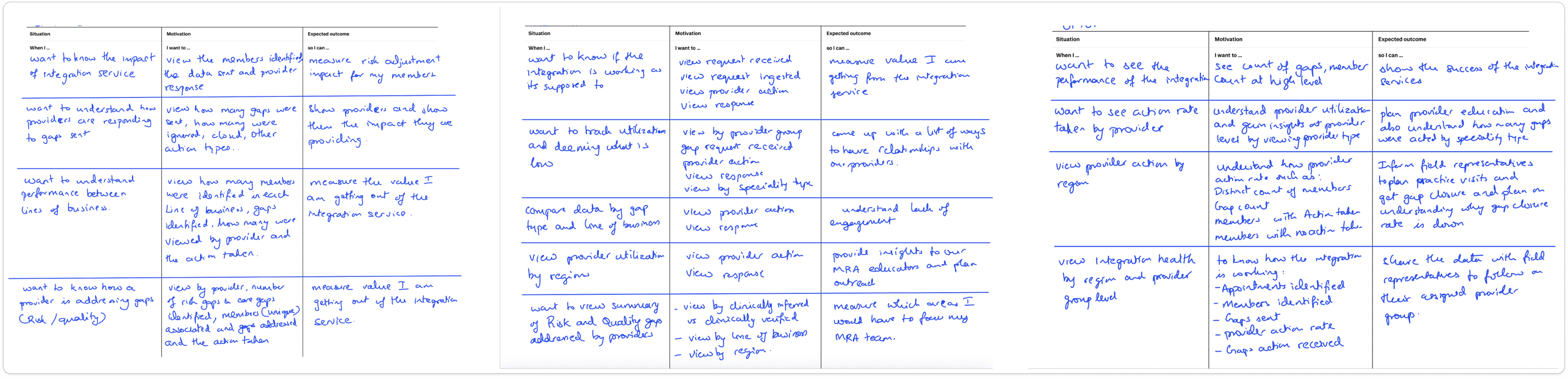
// Defining the JTBD
// Ideation
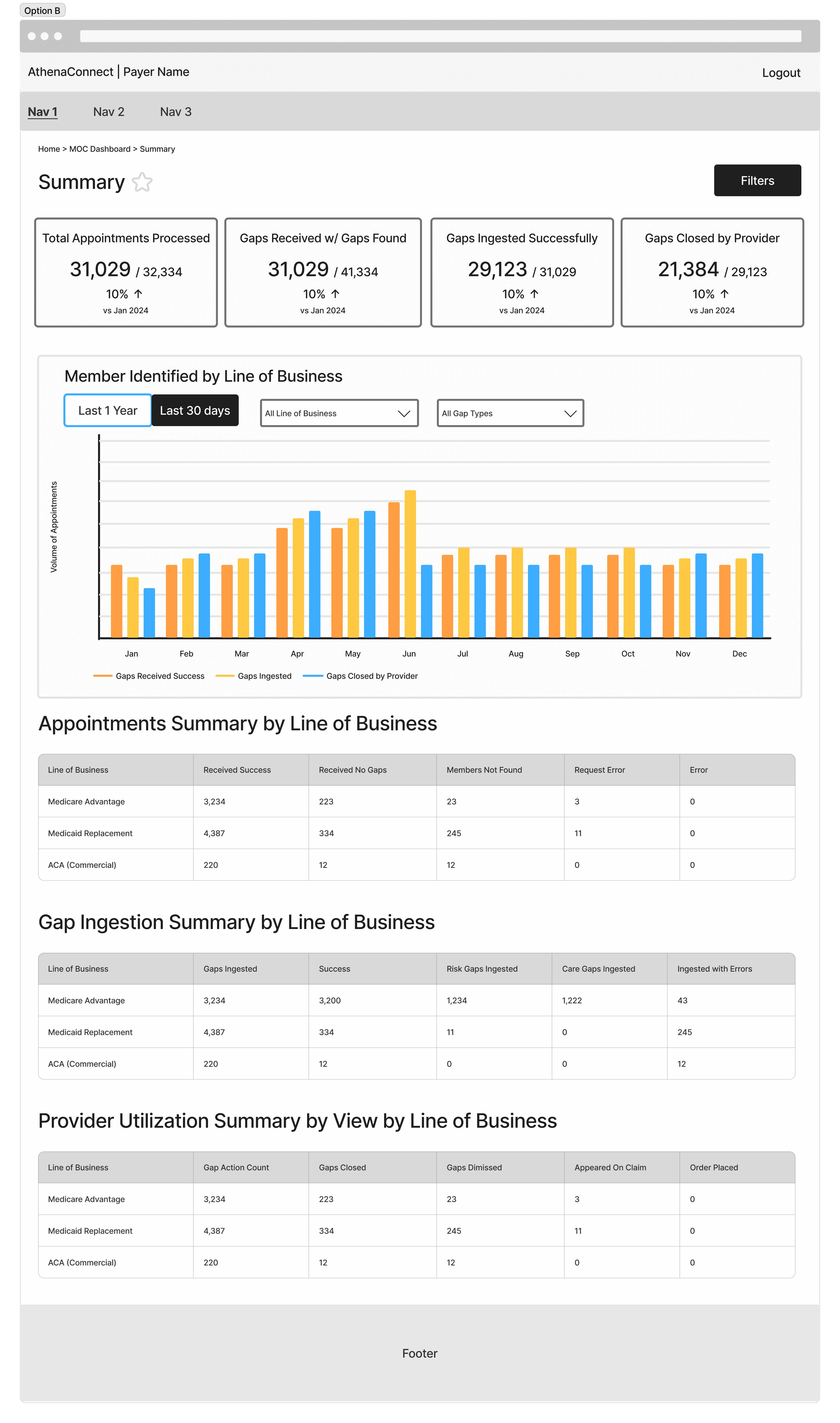
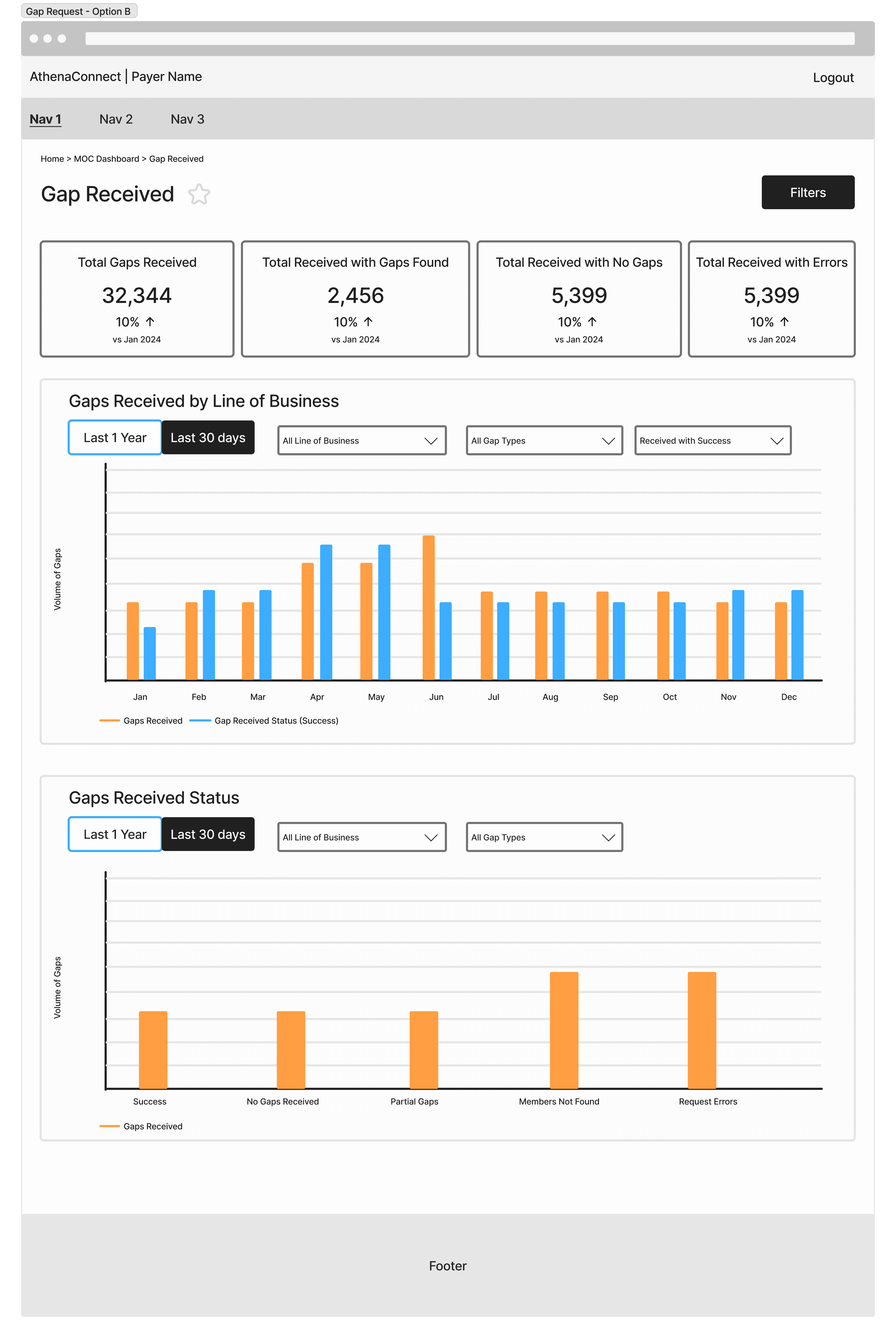
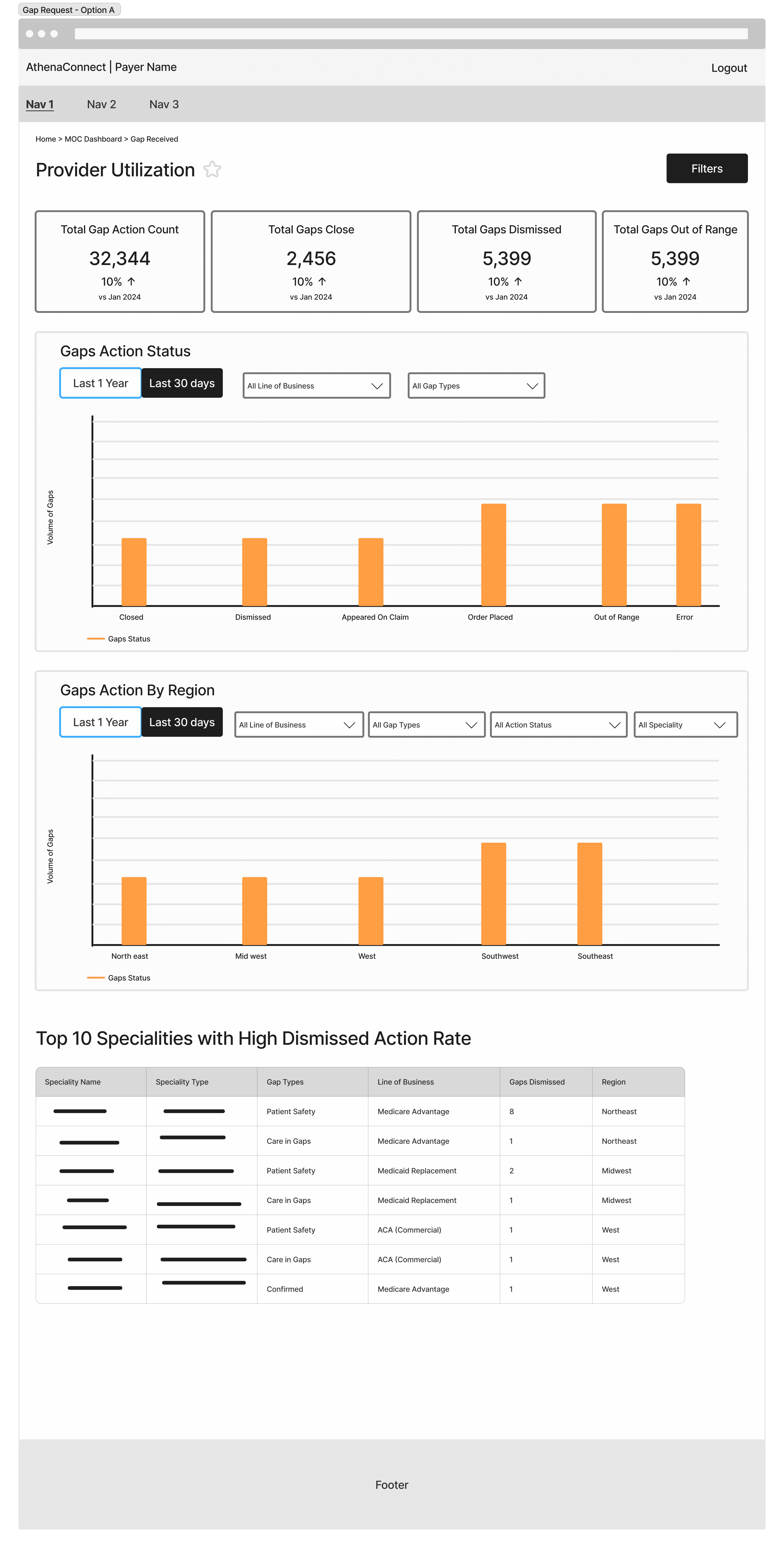
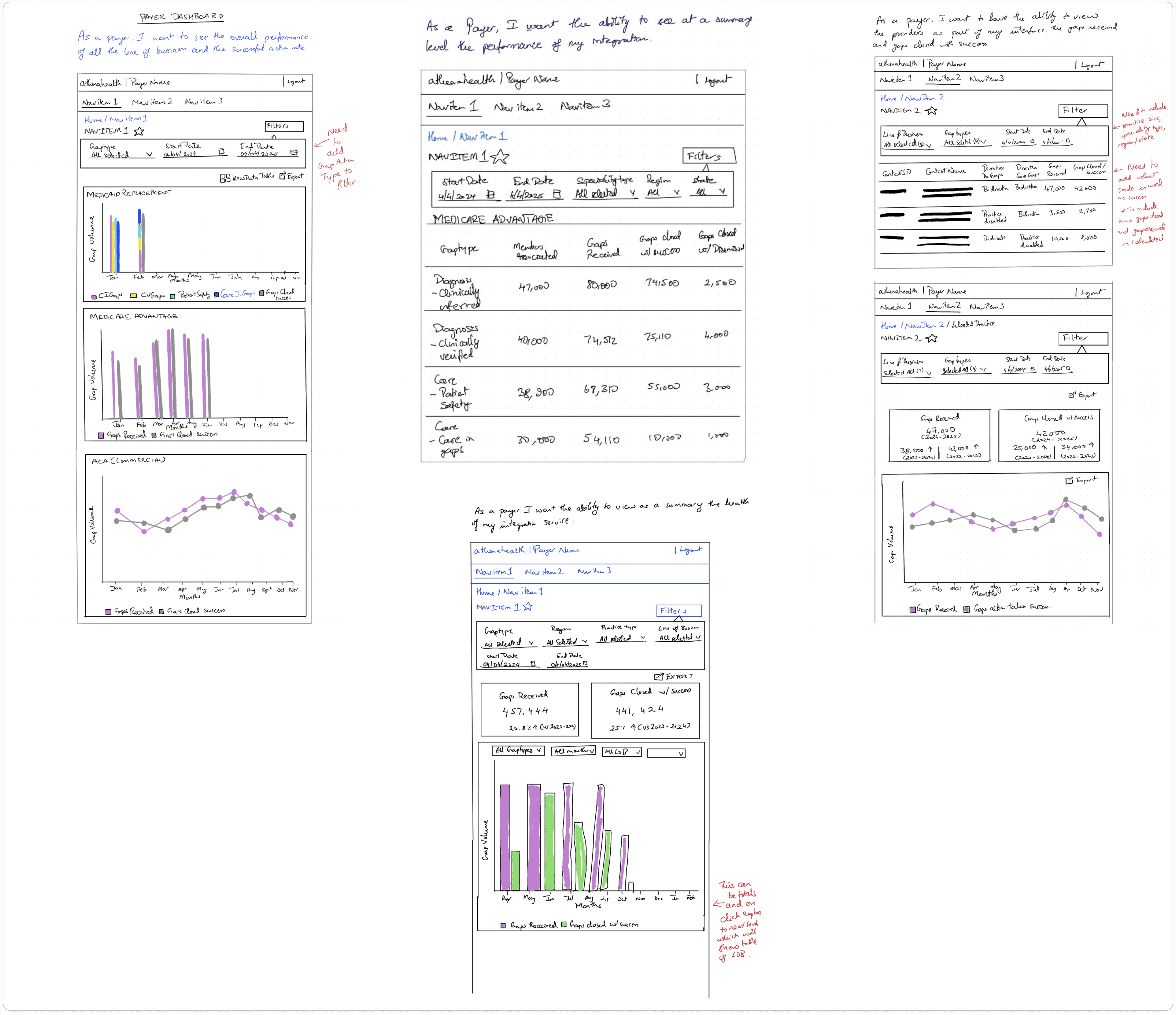
// AI Prototype
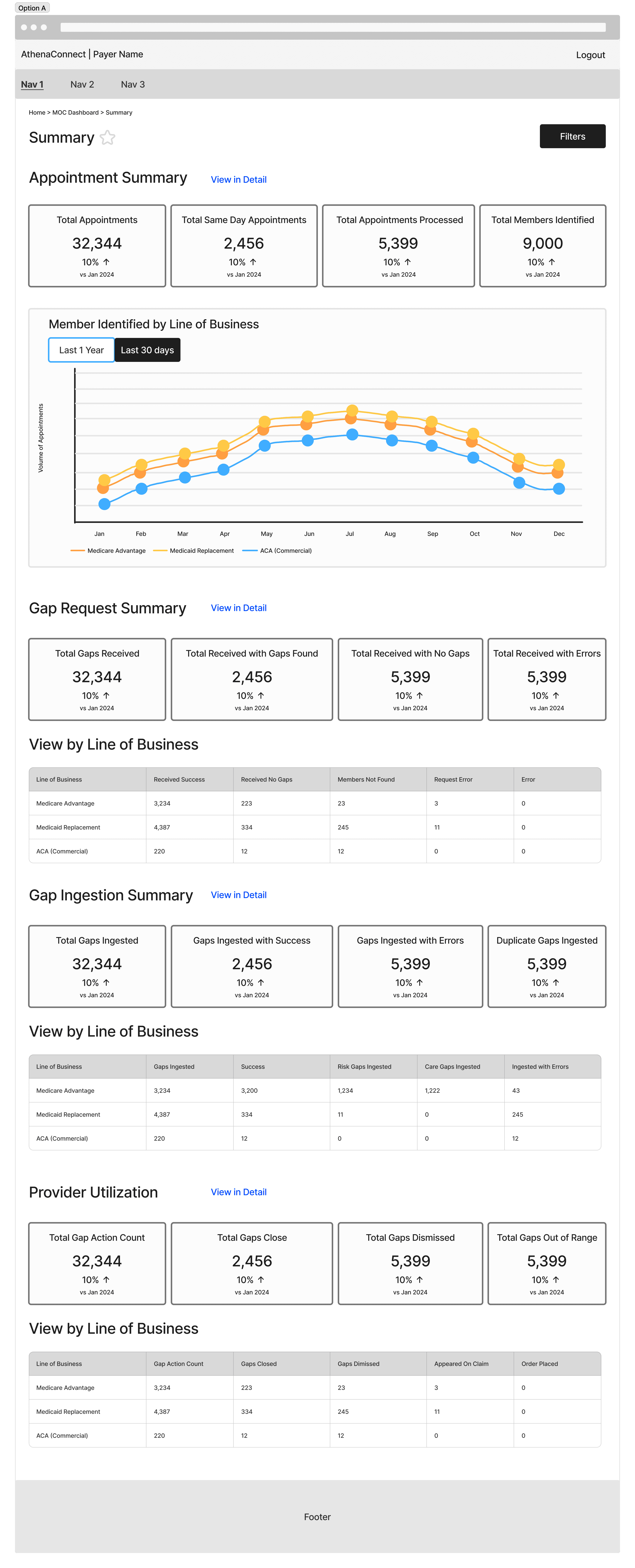
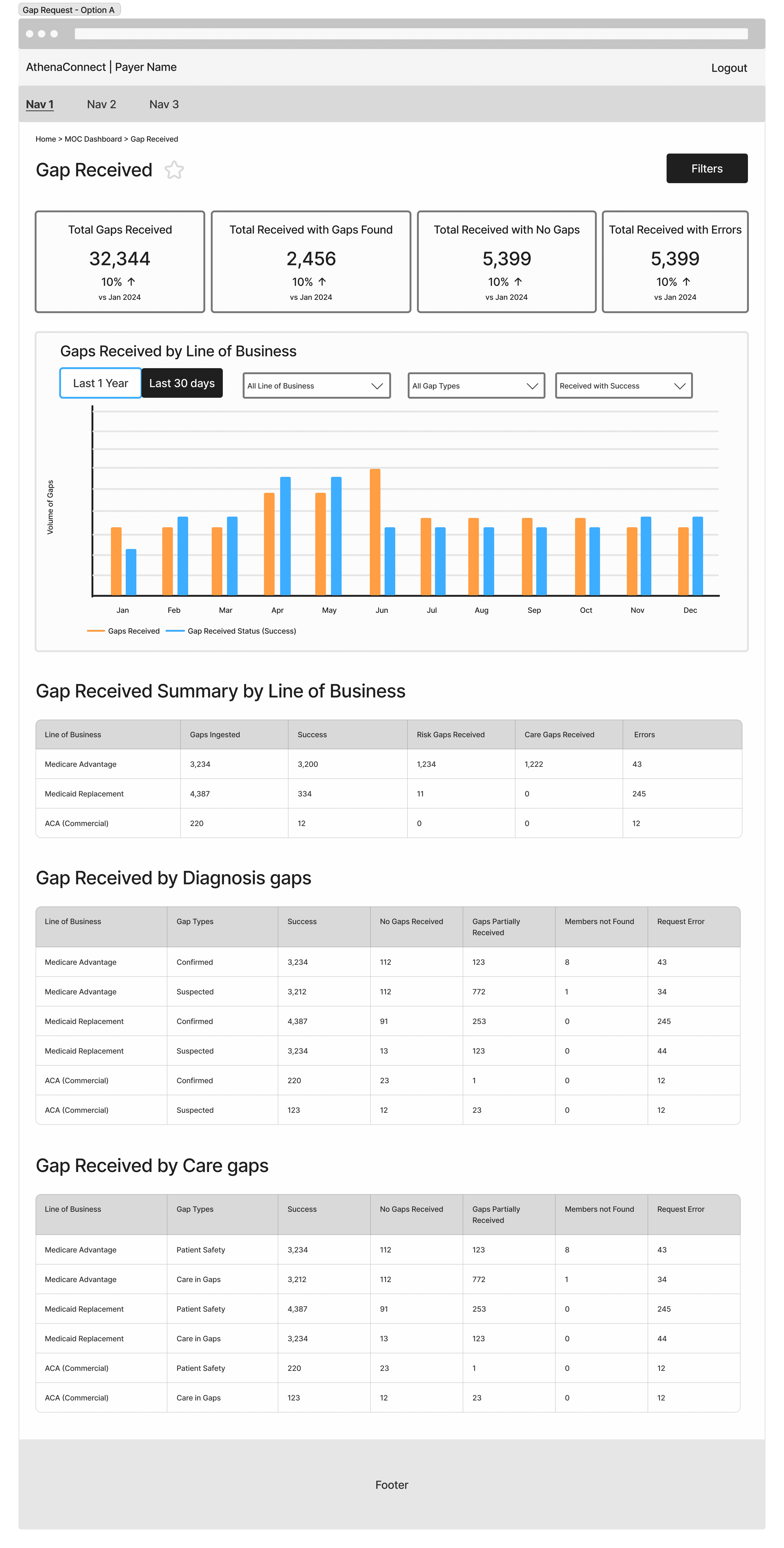
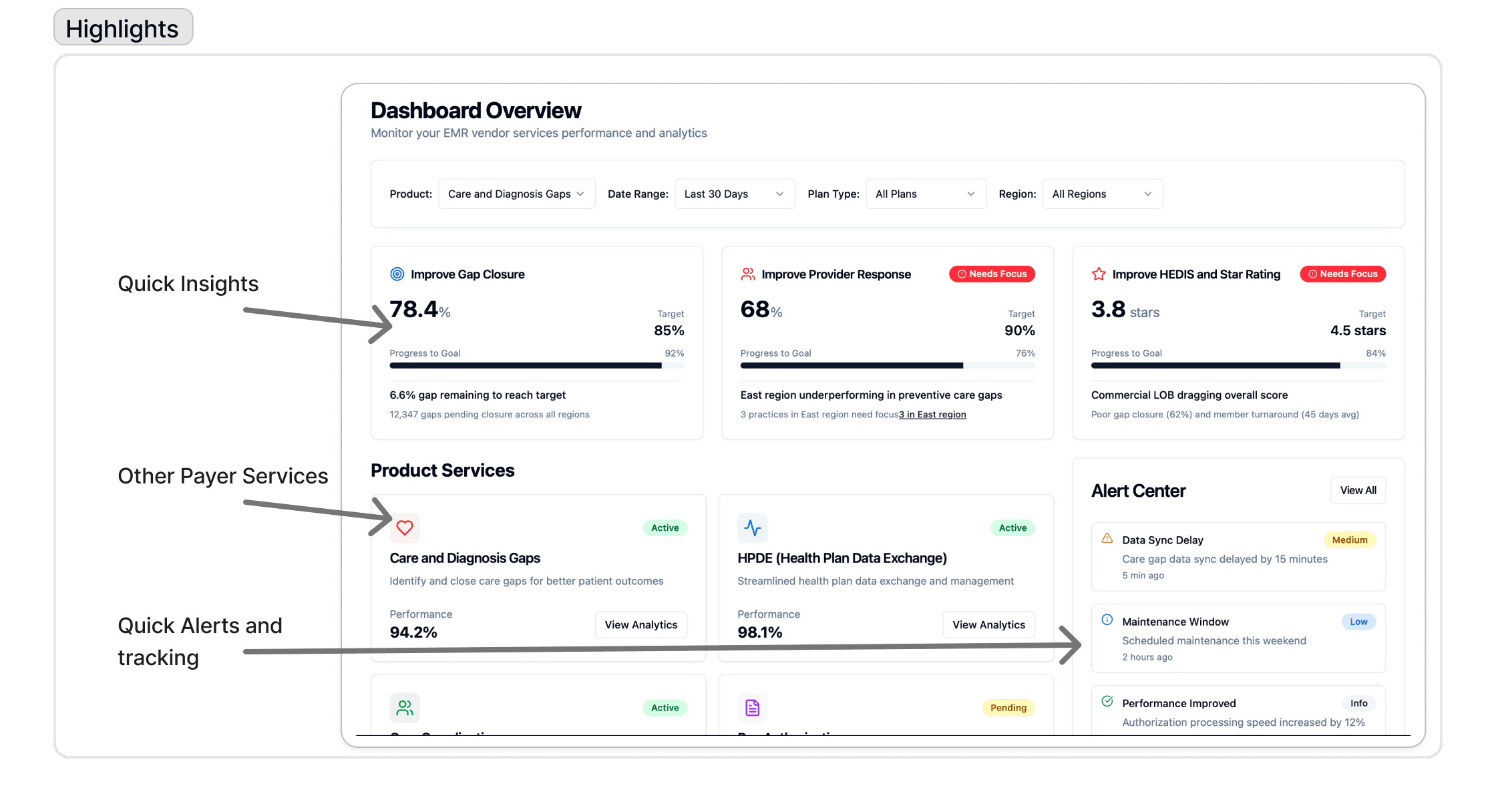
I designed a rapid prototype for quick resonance test with payers to ensure alignment and quick iterations. Leveraged ChatGPT to iterate the prompt that I fed to lovable.dev to define prototype.
// 06. Conclusion
A scalable foundation delivered
Prior to resonance testing, I successfully secured a Strategic Green-Light for development. My exit was preceded by a comprehensive handoff designed to ensure the vision's integrity throughout the 2025 production cycle.
Full Technical Specs
Documented all interaction models and components used for the engineering team for their sprint planning.
Stakeholder Alignment
Delivered a detailed resonance guide summarizing executive feedback for incoming design lead.
Ecosystem Roadmap
Defined platform's long-term roadmap influencing cross-vertical Product Owners to begin architecting for their stakeholders